


Hello! I want to apologize for being on an extremely LONGGG hiatus.
I have working behind the scenes to give each and every founder who is part of Table for One immense value.
So, here are the updates:
We have a Tool leaderboard! If you’re tired of getting bombarded with new AI tools and don’t know which ones you should use, this is your place to go. I’ve analyzed 373 tools till now and I will continue to add more. (for all subscribers)
Monthly office hours to brainstorm GTM strategies. Check out the first one here. (for all subscribers)
Tool partnerships to make you move fast! We already have two partners live. So check them out here. (for paid subscribers only)
GTM strategy kits. Downloadable strategy kits with my ideas on what you can do. For founders who have an MVP and are looking for their first 100 customers. At the end of this article you will find the first 5 kits. (for paid subscribers only)
Okay, now onto the GTM plays!
Six months into building Shezaar, I was posting everywhere: LinkedIn, Instagram, TikTok, Substack and Reddit.
Because if you are building a consumer app, content seems to be the only dominant play. Right?
But two months of that got me thousands of followers but exactly ZERO leads.
Today, I work as a fractional GTM lead for early-stage founders. So, I spend days in that messy stretch of finding the first customers.
I’ve watched founders run brilliant early-stage strategies, and I’ve watched some make mistakes that were really hard (or at least very expensive) to undo.
So… I took apart 50 apps built for consumers using information from the interviews I conducted, some that I read, and my amazing skill to lurk in Reddit communities, to help you figure out the plays that matter today.
This post obviously does not include Uber or Airbnb. Because what worked for them probably won’t work for founders right now.
Okay… Let’s get into it.
Are you in a hurry? Jump to TLDR.
Play One: Your App Is The Hero
Who doesn’t like entertainment content?
I absolutely LOVE watching the BK Coffee Shop series! And I do want to watch what happens at the Cluely office and see Ling Long annoyed. But, would I use Cluely or would I have visited BK Coffee Shop (if it existed)?
Maybe not.
So what’s the difference between content we just enjoy and content that makes us download an app?
Tolan figured it out.
Tolan is an app where you talk to your own little cartoon alien.
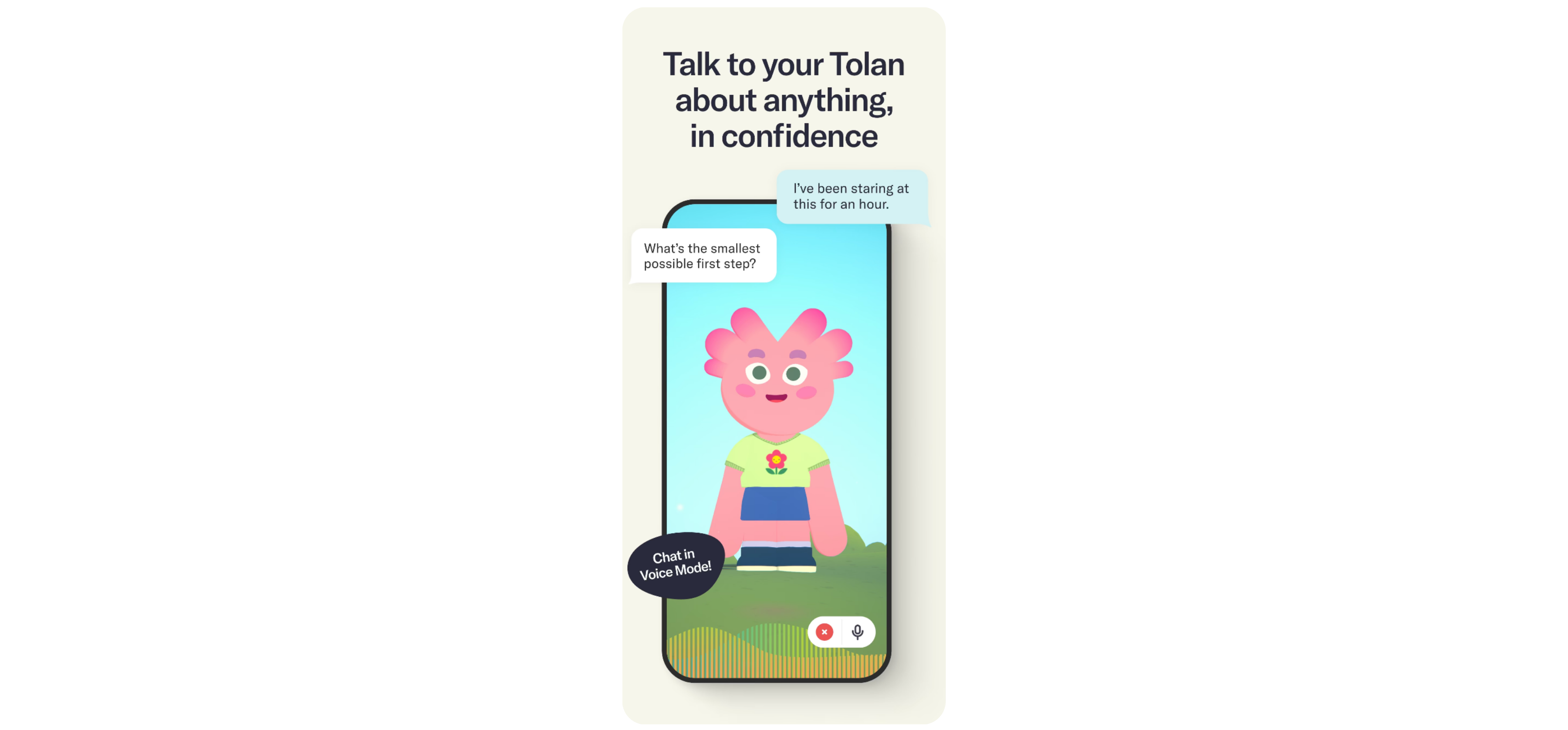
They push heavily on UGC content. They paid creators, mostly college students, to post videos that looked like any other day in their lives. Studying at 3 AM with my Tolan. Doing makeup while chatting with Tolan. Asking Tolan for dating advice. Just normal people talking. Some of it is entertaining and some just simple day in my life.
And that worked wonders. The cofounder, Ajay Mehta, shared that maybe one in twenty videos popped off, bringing them 10,000 - 15,000 installs in a day!
But this strategy works for Tolan only because the product (i.e. Tolan) is a central part of the content. A viewer can see themself using Tolan.
You aren’t watching a skit that has nothing to do with the app. You’re watching the app do exactly what you’d pay for. And you will download it… at least for the curiosity.
After its “cheat on everything” launch video, Cluely pushed hard on the content machine. They have practically turned their engineers into content creators and they post 3 videos a day. But most people won’t download Cluely (the AI meeting assistant) just because they liked a random office skit.
So, entertainment only works when your product is the hero. Otherwise you’ll end up with a lot of fans but not many buyers.
And you do not need a big raise to do this. Some apps pay as little as $5 for every thousand views.
Play Two: Please The Connectors
If you have studies Network Science or Network Theory or Human Networks, you might have come across the concept of a Broker.
In the study of human networks, a broker is a person who bridges the gap between two, otherwise disconnected, groups.
Every category you can think of has a broker. It might be a fitness instructor, a matchmaker, a party host, or a newsletter writer.
For Runna, that person was the cofounder Ben Parker himself.
Ben was coaching around 40 runners online. At that time, Runna was nothing but PDF running plan. But Ben has access to 40 runners, so his runners became his first users.
You don’t have to be Ben. You can find people like Ben in every category. You need someone who already gathers your users in one place. And you need to make sure they love your app.
For Shezaar those connectors were micro influencers who talked about sustainable fashion.
Because one yes from them gets you multiple users.
I have created The first 100 GTM Strategy kits for apps in fashion, fitness, photo/video, social and dating. So if you are building in this category, be sure to check those out.
Play Three: Own A Small Corner
Tell me… do you think your app is for everyone in the US (or whichever country you’re in) just because it’s online?
You might be right, but it’s definitely not where you should start.
Nikita Bier launched TBH one school at a time.
They made a private Instagram account for each school, followed every student they could find, and then accepted all the follow-backs at once, right when the school day ended. Then they sent students an ambiguous invite by DM. Once enough students from a school downloaded TBH, the app would “unlock” for that campus.
So, by day two, almost 40% of the school was on the app.
Granola had the same strategy with a different execution. Granola’s founders knew the note-taking apps on the market were mediocre, and anyone who has online meetings needs one. But they didn’t start with everyone. They started with a very specific group, VCs.
VCs take a ton of meeting notes, and they want a note taker that lets them add their own take. VCs are also a small group that talks A LOT. So once enough of them were using Granola, the rest found out fast. And once the VCs were using it, so were their founders.
So the trick is to start with a group small enough to unlock network effects (even if your product doesn’t have any!).
Play Four: Be There To Clean Up
Once an app reaches a certain size, it has limited incentives to keep pushing improvements.
It’s the curse of growth.
Every new feature has to make it through the bureaucratic channels. Everything becomes less about the user experience and more about the margins. Until one day, it becomes that annoying app you still use because you can’t find an alternative.
When Intuit announced it was shutting down Mint, Copilot, a smaller budgeting app, grew more in the next four months than it had in the previous four years.
And the week after the 2024 US election, StoryGraph got ten times its normal signups from readers leaving Amazon-owned Goodreads.
Now, I’m not asking you to wait for your biggest competitor to shut down, or for its CEO to annoy the public (though it might happen if you pray hard enough).
But you CAN go find the people they’re already annoying.
For starters, set up free Google Alerts for “[big app] troubleshooting” and “[big app] issues.” You can even set up F5Bot to scan for complaints on Reddit. Answer people’s questions about your competitor’s product first, and only mention yours (ideally with a free trial) when it actually fixes their problem.
Read your competitor’s one-star App Store reviews, because that’s a free list of exactly what their users want and aren’t getting.
Then make switching painless. When Quizlet put its study mode behind a paywall, Knowt, a free study app, added an importer where you just paste your Quizlet link. So add a one-click import if you need to.
Their worst week can be your best one.
Play Five: Army Of Salespeople
Some of the best marketing an app can do is give people a simple way to share it.
Think about the last Partiful invite you got. You opened it to RSVP, and somewhere along the way you ended up creating an account. Retro built the invite into the app itself. You have to share one photo a week to see your friends’ photos, and it’s now at about a million users. Both Locker and Beni let you build wishlists and collections that you can send to your friends.
But what if nothing about your app needs a second person?
Well… then you need to figure out the social job your app does for your user. How does using it make them feel? Does it let them show off, prove something, or get help?
Nobody needed a friend to play Wordle. Still people shared! Because when you finished, it gave you a little grid of green and yellow squares that showed how you did. The people who cracked it in 2-3 tries wanted to show off. And so Worldle went from 90 players to about 300,000 players in just two moths.
So find the moment your user feels proudest (the finished workout, the first match, the outfit they put together) and make it easy for them to share it.
And NEVER force it!
Lapse, an invite-only photo app, made you invite five friends before you could unlock the app. It shot to the top of the App Store, but the users quickly found loopholes, like sending the invites to themselves or to landline numbers. So it started strong but then downloads dropped by 70%.
So your users will sell your app for you… as long as you give them something worth sharing.
TLDR
This section, in fact this entire essay, assumes that you know your expected users well enough to identify which play you should use.
Play One: Your App Is The Hero. The content you create has to make it easy for your users to visualize themselves using your app. Don’t create surface-level entertainment content because it works. You need people to download not to watch.
Play Two: Please The Connectors. Find the person who already gathers all your users in one place. Someone like a coach, a host or a matchmaker. And make them fall in love with your app. One yes from them can get you twenty users.
Play Three: Own A Small Corner. Focus on one school, one neighborhood, one building, one group (like how TBH had schools and Granola had VCs). Manufacture your network effects.
Play Four: Be There To Clean Up. Find the people who are annoyed by your biggest competitor product. Solve their problem. And once they are happy… pitch your product as the better solution.
Play Five : Army Of Salespeople. Find the moment that makes your user feel the proudest. Make it easy for them to share that moment immediately. Just never force it.
So which play should you run?
Honestly, it depends on what you are building. The things that work for a fitness app won’t work for a dating app.
And in today’s world you definitely need a very targeted approach.
That is why I am building GTM kits! They are well researched and targeted kits for each category within an industry.
Each kit tells you which play to run first, the exact subreddits, groups and campuses to target. And each one has a ton of ideas from me too!
The first 5 kits (that are below the paywall) are for apps in Fashion, Dating, Fitness, Photo & Video, and Social.
If you’d rather have your AI pick your play there is also a prompt that you can paste directly into ChatGPT or Claude.
