


Yesterday, I hosted the first ever Table for One event, at Wefunder in San Francisco, as a part of SF Tech Week.
We started with a mixer, then had a panel discussion (which coincidentally was a panel of all women founders) and ended with a live roast.
All of it was built around a simple question: How can we, as founders, create content that gets us users?
And I had A LOT of questions of my own.
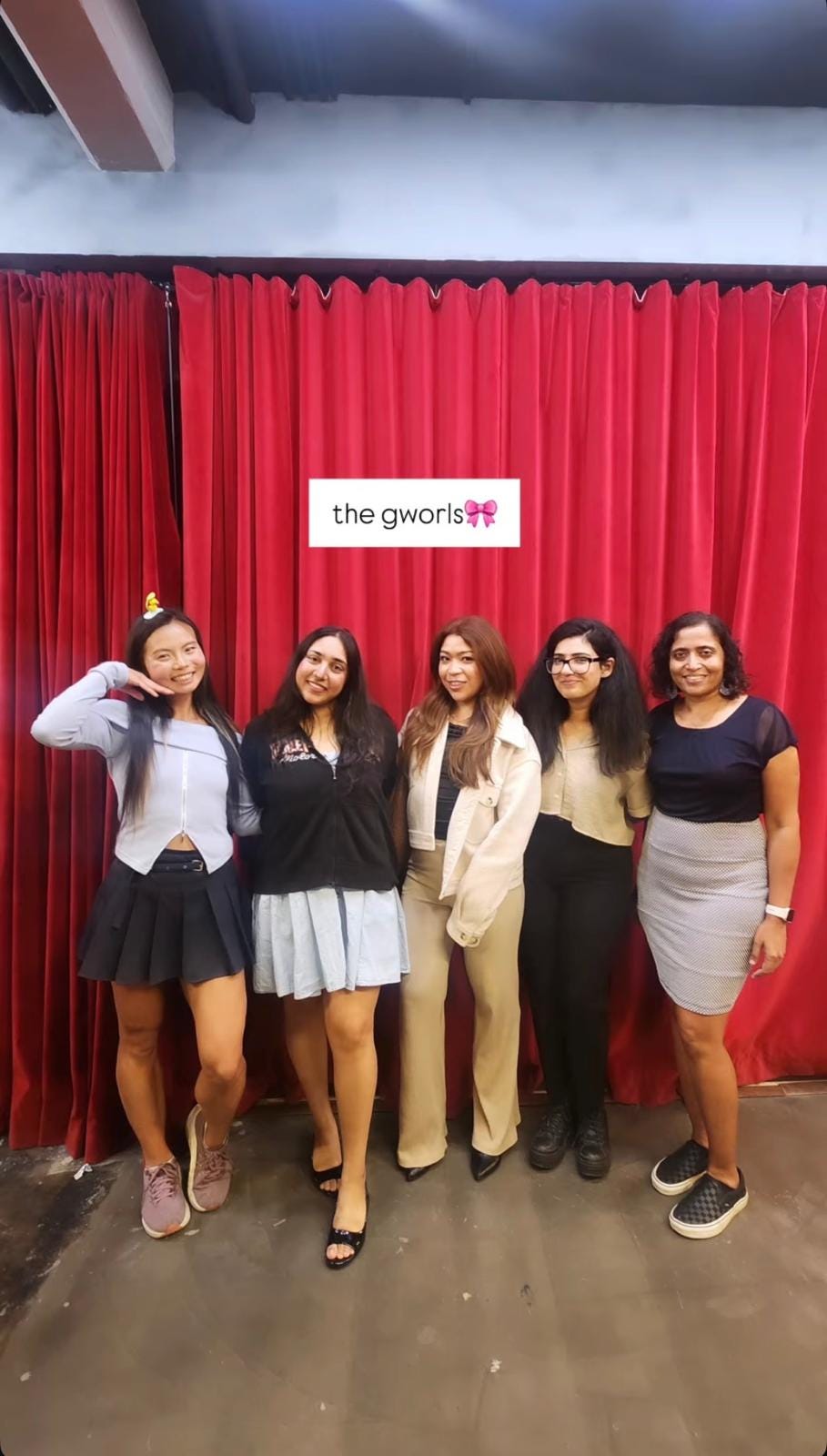
So I got four founders who have done this insanely well onto one panel, moderated by my co-host Priya Ganguly, founder of main thing.
Vidya Narayanan, co-founder of FinalLayer. 43K+ on Instagram, 16K+ on LinkedIn, 13K+ on TikTok.
Sarina Campanella, founder of LALELE. 85K+ on Instagram, 55K+ on TikTok, and she’s been featured in Vogue.
Grace Ling, co-founder of Design Buddies. 133K+ on LinkedIn and 32K+ on Instagram, with features in the WSJ and the NYT.
Julia Pintar, co-founder of Playkit. 32K+ on X, and a mention in Forbes.

So this is my debrief of everything I learned.
The Bull Case For Posting
More Content = Less CAC
Vidya said something that was insanely useful. Once you start putting out content, the CAC for your product starts reducing significantly.
Her logic is that it doesn’t matter where your users are coming from, because everything boils down to CAC. How much time and how much money are you spending to get one user onto your platform?
Coincidentally, Vidya’s product is for LinkedIn and X, and she doesn’t even have an X account! She posts on Instagram, TikTok and LinkedIn, and a lot of her users come inbound from Instagram. They’re people who want to build their personal brand on LinkedIn.
I had always assumed that you HAVE to post on the platform your product is built for. But Vidya’s users are scrolling in a lot more places than that.
Julia told me something similar in a private conversation. When you’re starting with content, it’s of utmost importance to start with the platforms you’re comfortable with and can be consistent on, irrespective of whether your users are on that platform.
That hit home SO hard.
With Shezaar, I started on Instagram and TikTok, and I’m an extremely introverted person. Those two were not the best platforms for me. I’d second guess everything I created and obsess over tiny details, details most people would never notice because they’d never even watch that part of the video.
When I started writing on Substack, it was a much more natural way of connecting with my people.
So if you’ve recorded the same 30-second video six times this week and posted none of them, the platform might be the problem.
Opportunities Find You
A lot of the inbound for Playkit comes from Julia posting on LinkedIn and X, the two platforms she told me she’s comfortable on. And Playkit caters to people on Instagram and TikTok! A lot of the partnerships she’s found along the way came from X too.
Priya had her own version of this. The two of us met because of Substack. And she found our venue host on Twitter!
I have similar stories.
I’ve raked in two partners for Table for One, and I get paid to host events. Obviously, part of that is because I ask for them. I shoot my shot a lot, and sometimes it lands. But it lands way more often when the person on the other side has already read something I wrote.
Thicker Skin, Stronger Spine
Sarina said that putting yourself out there builds a thicker skin and a stronger spine. And that’s a must-have skill for each and every founder.
You’ll face so many rejections and so many failures. Just getting over that fear of putting yourself and your thoughts out there is a lot. It genuinely does shift your mindset. The panel had a lot to say about that fear, and I’ll come back to it.
What Makes Your Content Stick
Now to the meat of the session. A lot of what the panel said matched what I’m already seeing in my own content, in the stuff that works and the stuff that doesn’t.
1. Show Your Receipts
Everyone in general is extremely nosy. And people love it when you show them what actually happened, even if it’s just a screenshot.
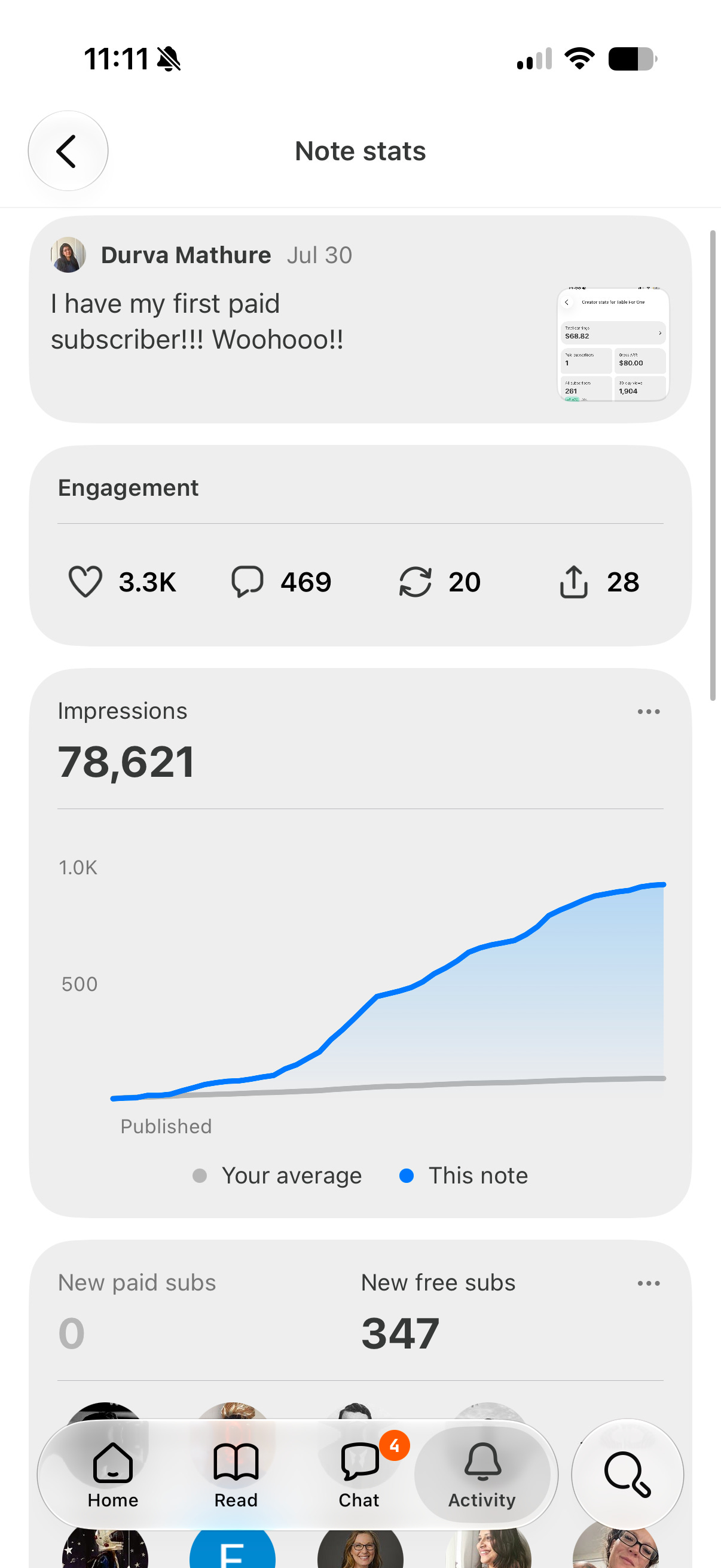
Julia said her Twitter took off when she posted a screenshot of their Stripe dashboard with money coming into the account. A few of the other panelists echoed the same logic.
That’s exactly what worked for me too. Sharing the screenshot of my first paid subscriber got me an INSANE amount of subscribers.
2. Make People Give A Shit
You need to figure out how to make people give a shit about you. A lot of people (including me) share what we think and how we think about things. But Grace said that we should always think from the perspective of our viewers or readers.
So I am learning that I shouldn’t share things because they’re cool, or because I did them. I should take you guys along with me, and share what I learned and where I messed up in a way that anyone can understand.
For an Instagram creator, that means instead of sharing pictures from all the cool events you went to, you share what you learned at each of those events.
This post is my attempt at implementing exactly that.
3. Share The Failed Experiments
Share the process and the failures as much as you want to share the wins. I believe I do talk a lot about my failures. But I only talk about the end result. I haven’t yet spoken much about the experiments I ran that failed, my thought process behind a decision, and then my analysis of how that decision turned out.
So let me do that right now.
At Shezaar, I believed content was the only play for a consumer app. So I posted on five platforms at once, about four hours of production every single day. And only about 2% of the people that content reached ever downloaded the product.
Meanwhile on Reddit, I was just typing comments and messages, one thread at a time. And 32 to 35% of those people got on a user call with me!
I was posting to five platforms’ worth of everyone. If I could go back, I’d have gone through the stylists and resellers who already had my shopper.
And that’s the part people relate to. When you share a failure, share the logic behind it too, so people can analyze the decision and use it in their own situation.
4. It Will Be Cringe
It’s going to be cringe no matter what you do. No matter what platform you choose, you’re going to feel like an imposter. But you have to do it anyway.
Vidya mentioned that when she started posting videos, she hated her voice.
SAME. When I used to make Instagram and TikTok videos, I hated watching them after. I hated my voice and I hated the way I said things.
And my husband used to play them around me, multiple times, just because he wanted to. I’d be like, okay, STOP. I don’t want to hear how I say things.
But if you don’t embrace the cringe, you’re never going to get past that phase.
5. Haters Are Secret Fans
This one came from Grace, and it’s going to be my mindset shift. Your haters are your secret fans.
If you treat each and every hate comment as someone giving you a spot in their brain just to think about you, wouldn’t that make your life easier?
All the panelists we had yesterday have had Reddit posts shit-talking them and what they were doing. I can’t imagine how that must feel. It must feel like a punch in your gut. But each and every one of them took it as fuel to their fire, and they’ve done tremendously well since.
Find Me On X And LinkedIn
Yesterday’s event was FIRE. So many people there inspired me to start posting on X and LinkedIn as well, so you’re going to see a lot of me on both.
If you’re on either, connect with me or give me a follow. I’m on LinkedIn and on X.
This week, pick the one platform you’re comfortable on and post there, before you open the one your users are supposedly on.
Which platform are you creating content on right now, and where can I find you?
I write this for founders building alone with more time than money. If that is you, subscribe!!